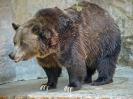
Polar Bears and Kodiak (brown bears), on the other hand, are known to be a higher risk of danger to humans. They are more common in Alaska.
Rule # 1: DO NOT FEED BEARS OR ALLOW THEM TO GET INTO YOUR GARBAGE.
There is a saying "A fed bear is a dead bear".
Once a bear comes into contact with human foods or garbage, they return again and again.
Wildlife managers called in to deal with a "problem" bear will try relocating it or discouraging it by using pepper spray, firing rubber bullets and deploying specially trained bear dogs. If these methods fail, killing the bear is usually the next course of action. Black bears are given three chances when they are relocated. Unfortunately, most relocated bears return to the location they were first trapped within days and have to be killed.
All North American bears can be dangerous in the following situations: when accompanied by cubs, when surprised by the sudden appearance of humans, when approached while feeding, guarding a kill, fishing, hungry, injured, or breeding, and when conditioned to human foods.
Bears by State
Black Bear Population by State 2026
| Alaska | 100,000 |
| California | 35,000 |
| Maine | 35,000 |
| Idaho | 30,000 |
| Oregon | 27,500 |
| Washington | 27,500 |
| Wisconsin | 24,000 |
| North Carolina | 20,000 |
| Pennsylvania | 20,000 |
| Colorado | 18,500 |
|
| Virginia | 18,000 |
| Minnesota | 15,500 |
| Montana | 13,000 |
| West Virginia | 13,000 |
| Michigan | 12,000 |
| Vermont | 7,750 |
| New York | 7,000 |
| New Hampshire | 5,600 |
| New Mexico | 5,500 |
| Tennessee | 5,500 |
|
| Georgia | 5,100 |
| Arkansas | 5,000 |
| Massachusetts | 5,000 |
| Florida | 4,050 |
| Utah | 4,000 |
| New Jersey | 3,158 |
| Arizona | 2,500 |
| Maryland | 2,000 |
| Oklahoma | 2,000 |
| Louisiana | 1,200 |
|
| South Carolina | 1,125 |
| Connecticut | 1,100 |
| Kentucky | 1,000 |
| Missouri | 800 |
| Nevada | 600 |
| Alabama | 200 |
| Mississippi | 150 |
| Ohio | 75 |
| Texas | 75 |
| Rhode Island | 7 |
|
How many Grizzly bears are in Yellowstone?
There are approximately 55,000 grizzly bears spread across the United States. These bears can be encountered in five states:
- Alaska: Around 30,000
- Washington: Approximately 500
- Yellowstone
- Idaho: About 100
- Montana: Roughly 2,000
- Wyoming: Around 600
Bear Safety
In Camp:
See Bear-proof Campsites
On the Trail:
- Let someone know where you are going and when you will return;
- Inquire about recent bear activity in the area you are visiting;
- Hike in groups, during daylight hours, keep children and pets close,stay on trails; "Hike in groups of four-or-more" is the mantra in bear country.
- Watch for bear signs - tracks, scat, claw marks on trees, diggings,torn apart logs;
- Make your presence known by making noise - talk loudly,clap hands, sing, or hang bells from your pack;
- Make extra noise on windy days, by running water,or in areas of low visibility;
- Carry EPA registered bear pepper spray *.
See: Bear Spray at Center for Wildlife
* Some people recommend wasp spray which will also go 25-30 feet and temporarily blinds the bear. Works on people also.
- Try to remain calm,never run, yell, or make any sudden movements;
- Identify yourself as human-talk to the bear in a low voice and slowly back away; Don't make direct eye contact, but keep a close look at the bear as you back away.
Note: Some sites say you may want to make eye contact in an offensive attack (see below), but this gets too complicated and I tell people a general rule is no eye contact.
If you encounter a bear that advances without acting or appearing stressed, the advance may be offensive. The bear either wants right of way, wants to assert dominance or, although it is unlikely, may be stalking you as possible prey. If this is the case, the bear's head will be up and ears erect.
(see Encountering a Bear at Manitoba Wildlife Protection.)
- Climb a tree if available. If you have enough time, and the bear continues to move closer, take advantage of a tall tree to climb. Remember, black bears are strong climbers as well. Grizzlies have also climbed short distances up trees after people. You want to get at least 10 m (33 feet) high to reduce the chance of being pulled out of the tree. Even though some bears can come up the tree after you, the hope is that they will feel less threatened, and thus less likely to chase you up the tree.
- Stay close to others and keep backpacks on, Unless there is food in your backpack, in which case you should drop it.
- Bears often bluff charge, if so, remain still, speak softly, and stand your ground;
- If you are carrying bear pepper spray,this is the time to use it;
- Report any bear sightings or incidents to wildlife managers.
If you encounter a black bear:
- Stay calm and quiet, back away, DO NOT run.
- Make yourself appear as large as possible.
- Never get between a mom and her cubs.
- Slowly walk away and make a loud noise.
- Eye contact; There are various opinions:
- Try to avoid direct eye contact. Bears seem to find this threatening behavior: 3Bears.net, MountainNature.com,
- Make Eye Contact but don't stare: Tahoe Council for Wild Bears, Calif. Dept. of Fish & Game
- It Depends on whether it's an offensive or defensive encounter:
Defensive: Bear will give visual and vocal cues like swatting or slamming its paw against the ground and blowing explosively through its nostrils, or lowering the head with ears drawn back while facing you.
Watch the bear through the corner of your eye and talk to it in a calm low-toned voice.
Offensive: The bear's head will be up and ears erect.
As a first response, give the bear right of way by moving aside and watching the bear.
If it continues to follow you, try dropping your pack and food stuff, then slowly back away in a lateral direction keeping an eye on the bear.
See Manitoba Wildlife for more.
If a bear persistently follows you or stalks you:
- Stop! Stand your ground and prepare to use your deterrent or any available improvised weapons such as rocks and sticks.
- Face the bear. Look directly towards it. You might try taking a step or two in the bear's direction to motivate it to back off. If the bear continues to follow you, act aggressively toward the bear. Let the bear know you are not easy prey and will fight back if attacked.
- Shout! Make yourself look as big as possible. Stamp your feet, as you take another step or two toward the bear. Use your deterrent.
- If the bear attacks (physical contact is made), fight for your life. Kick, punch or hit the bear with whatever weapon is available. Concentrate your attack on the face, eyes and nose. Fight any bear that attacks you in a building or tent.
If Attacked:
In the extreme case that a grizzly bear makes contact with you, play dead. Lie face down on the ground and place your hands around the back of your neck. Stay silent and don't move. Try to keep your legs spread apart to prevent the bear from rolling you over. If possible, leave your pack on to protect your back. Typically a grizzly bear will break off its attack once it feels the threat has been eliminated. Remain quiet and motionless for as long as possible. Bears will often watch from a distance and return at the first sign of movement.
Black bears attack very rarely, but when they do it is most likely a predatory attack (i.e.
looking for a meal).
Even though a normal black bear does not view people as food, a
starving or injured bear might. Playing dead or climbing a tree will not stop these kind of attacks, so your best recourse is to act aggressively and try to intimidate the bear by yelling and waving your arms and if necessary, fight back using any object available.
- NEVER feed or give water to black bears. Be aware that human behaviors, such as feeding other animals, can attract black bears.
- Remove garbage regularly or keep in bear-proof containers. Hide odors by regularly cleaning garbage cans with disinfectants, bleach or white vinegar. Or, Wait to put trash out until collection day.
- Double-bag your garbage and separate wet garbage.
- If you leave your house, even briefly, close your doors and windows securely (not just the screen doors) and make sure no food is out where a bear can smell it. A bear went right thru the screen door in our cabin to get at food left in the kitchen.
Don't leave food out where bears can see it. Bears have been reported to go thru doors or windows to get at food which is visible.
One person reported a bear breaking in when all they could see was a refrigerator; I haven't heard of anyone recommending you camouflage your refrigerator yet.
- Feed your pets inside or remove uneaten pet food between feedings.
- Remove other enticing food sources, such as birdseed, hummingbird feed (sweet liquid), fruit from trees or shrubs located near buildings.
- Don't leave trash, groceries, or animal feed in your car.
- Don't leave any scented products outside, even non-food items such as suntan lotion, insect repellent, soap or candles; Bears will sample anything that smells good.
- Keep bears away with bright lights, flashing white lights, and changes in the placement of scarecrows and similar objects. However, any frightening technique usually won't provide adequate long-term relief.
- Clean outdoor cookers and coolers thoroughly after each use. Burn off any remaining food particles and scrub the grease from grills, smokers and other outdoor cookers. Or, Store barbecue grills in a secure building.
- Remove brush and cover around homes and corrals, creating a 50-yard barrier.
Tahoe Council for Wild Bears
Bear Preservation League at Tahoe (530) 525-PAWS.
Get Bear Smart Society (GBS) Whistler, British Columbia.
Bears in New Jersey:
Bear protocol in New Jersey:
Bears are categorized as:
Category I bears pose a threat to public safety and property, including those that attack humans, enter homes or tents, and cause significant agricultural damage.
They are only 5% of bears here.
They are trapped and euthanized by the NJDFW.
Category II bears, or nuisance bears, are those conditioned to raid garbage receptacles and bird feeders and cause minor property damage. These bears do not pose a major threat to public safety and property.
These bears are aversively conditioned using rubber buckshot, pyrotechnic charges and bear dogs (black mouth curs) so that they receive a negative experience associated with the nuisance location and people. If trapped, nuisance bears are released on site and aversively conditioned.
Category III bears exhibit normal behavior and are not a nuisance or threat to public safety and property.
They are left alone and the residents are offered technical advice on bear-proofing surroundings.
See:
Black Bear in New Jersey Northwest | NJskylands.com
Living with Black Bears in New Jersey (from Rutgers NJAES)
NJ-DEP Division of Fish & Wildlife - Black Bear Research and Management
Bear Stories:
In 2011 some National Outdoor Leadership School students were attacked by bear.
The attack came as the lead hiker rounded a corner in a creek bed encountering a bear who attacked before he could get his bear spray out. The noise of the river and rain may have drowned out sounds of the students so the bear was surprised. It initially did not see the other students so thought there was only one. He played dead and the bear went after others who had rounded the corner.
See story
Dangerous encounters with bears are rare in Alaska, and deadly encounters even more so. But several people are mauled every year and a few die. Anchorage rafters Rich Huffman, 61, and his wife, Kathy, 58, were killed by a grizzly while they slept in their tent along the Hulahula River on Alaska's North Slope in 2005. And Timothy Treadwell, 46, and girlfriend Amie Huguenard, 37, were killed near their tent in Katmai National Park and Preserve in 2003 in the most famous bear attack in Alaska history.
See List of fatal bear attacks in North America
Links:
Bear-proof Campsites
Homewood BEAR League - People living in harmony with bears
How to Live with Black Bears at the Forest Service
Bear Proof Your Property at TahoeWildBears.org
List of fatal bear attacks in North America
Alaska Bear Attack story
Living With California Black Bears (pdf) at California Department of Fish & Game
Bear Safety Tips
Avoiding Wild-Animal Problems at Placer County
Bear Etiquette
Grizzly Bear - National Wildlife Federation
Grizzly Bear fact sheet
Bear Spray at Center for Wildlife
Bear-proof Garbage Containers at: BearSaver,
Get Bear Smart Society
Bear Resistant Containers
Bear Proof Waste/Recycling Containers from Haul-All
Living with Black Bears
Safety in Bear Country, Bear Facts, and Bear Encounter Stories at the Boy Scout Site.
Learn What To Do If You Encounter a Bear in the Wilderness at MountainNature.com
Encountering a Bear (defensive vs offensive situations) at Manitoba Wildlife Protection.
last updated 11 August 2006
|
 Recreation
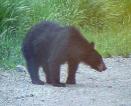
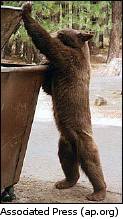 Black bears are generally afraid of people and will head the other way when they see you.
Black Bears can run up to 30 miles per hour and can climb trees.
Black bears are generally afraid of people and will head the other way when they see you.
Black Bears can run up to 30 miles per hour and can climb trees.